Pre-release
Kith is under active development. Formats and behavior can change between releases, and mistakes can break your servers. Back up anything you can't afford to lose.
Usage
Everything happens inside the TUI.
Server list
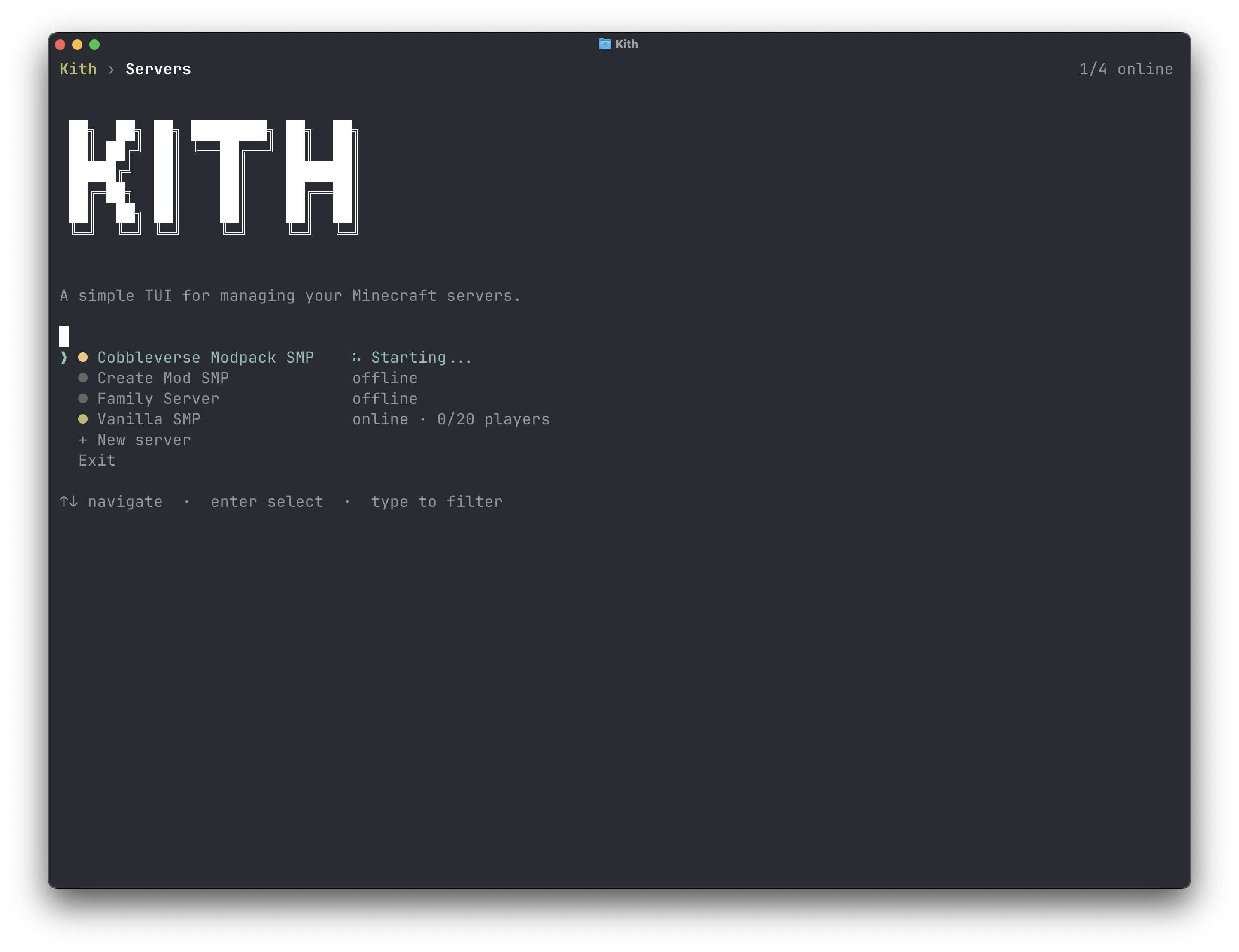
The home screen shows live status and player counts for every server. From here you pick a server to work with, or create a new one.
Creating a server
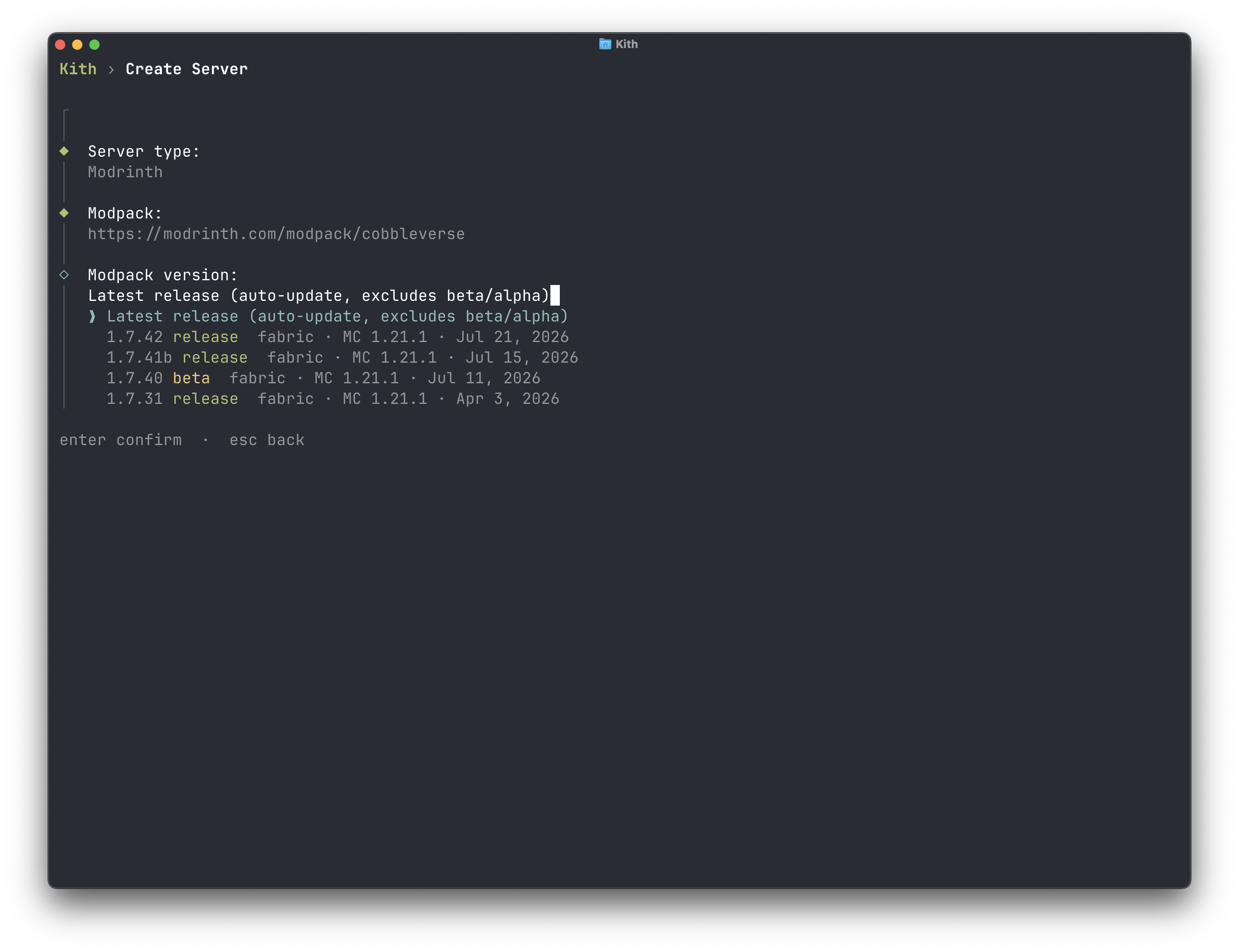
The server wizard walks you through creating a server. Paste a modpack link and kith validates it, lists every published version with its loader and release channel, and installs it. Vanilla servers work too.
Server details
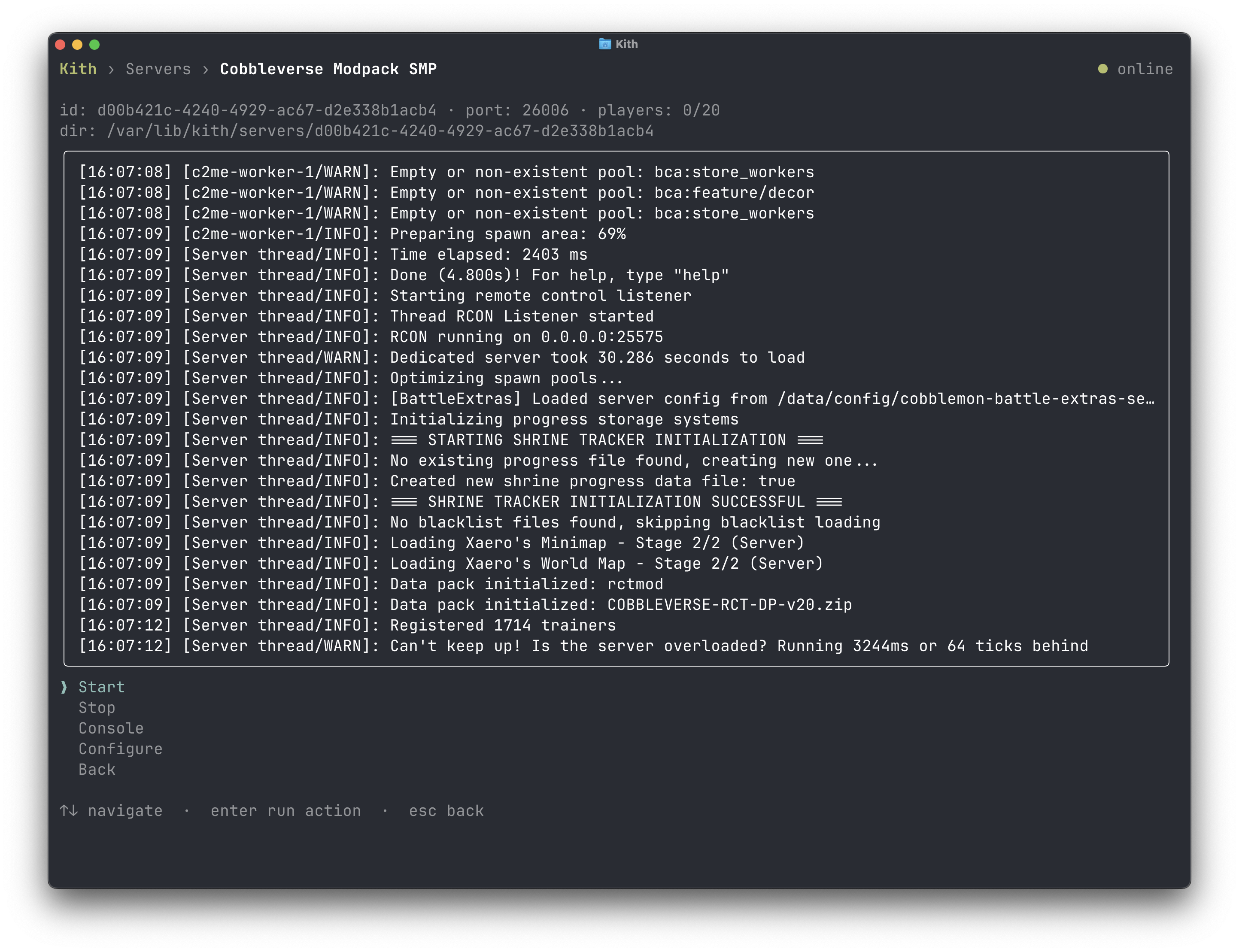
Select a server to manage it: start and stop it, stream logs, run console commands, and edit memory, port, version, and modpack settings.
Console
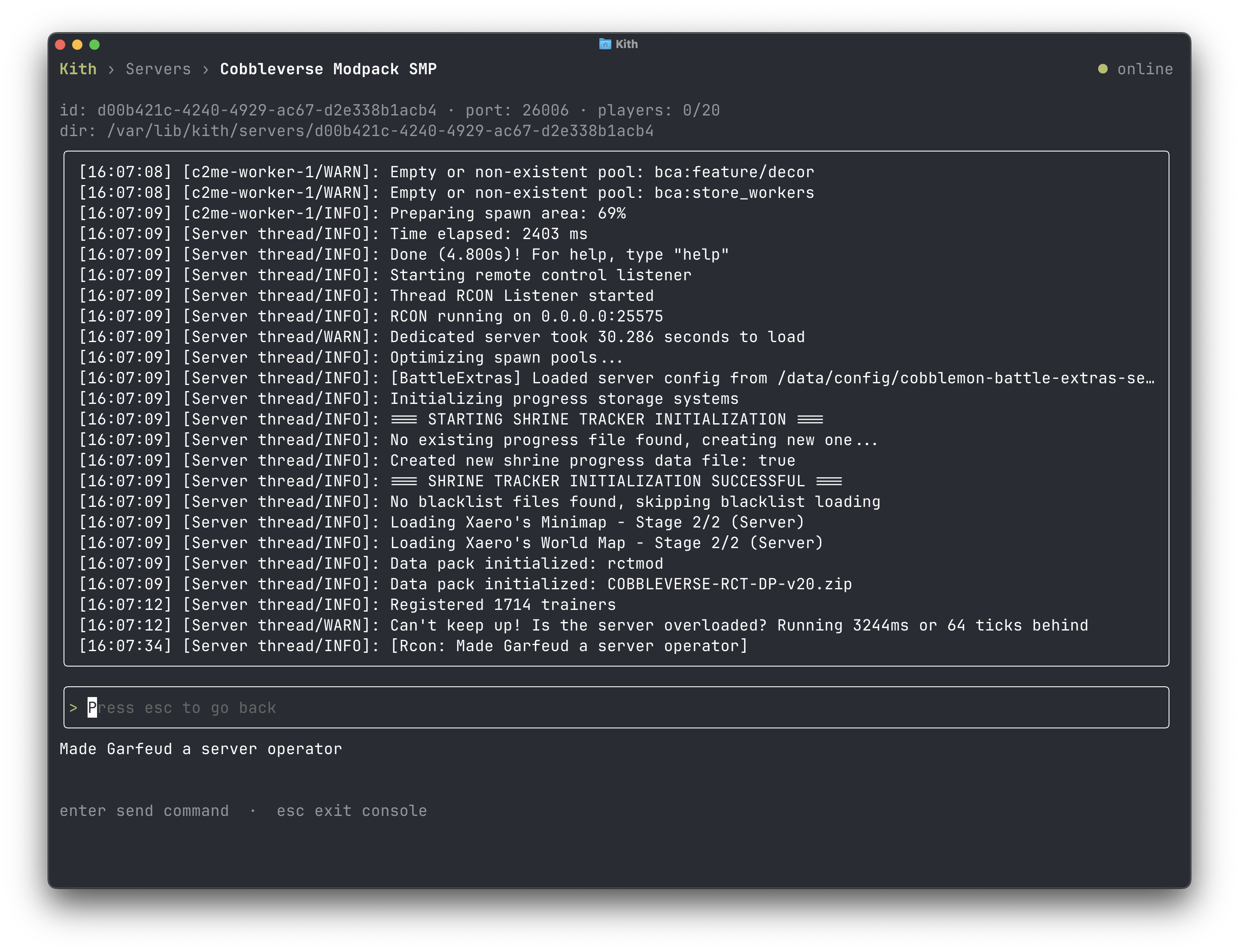
Watch logs stream by and run console commands without leaving the app.
Configure
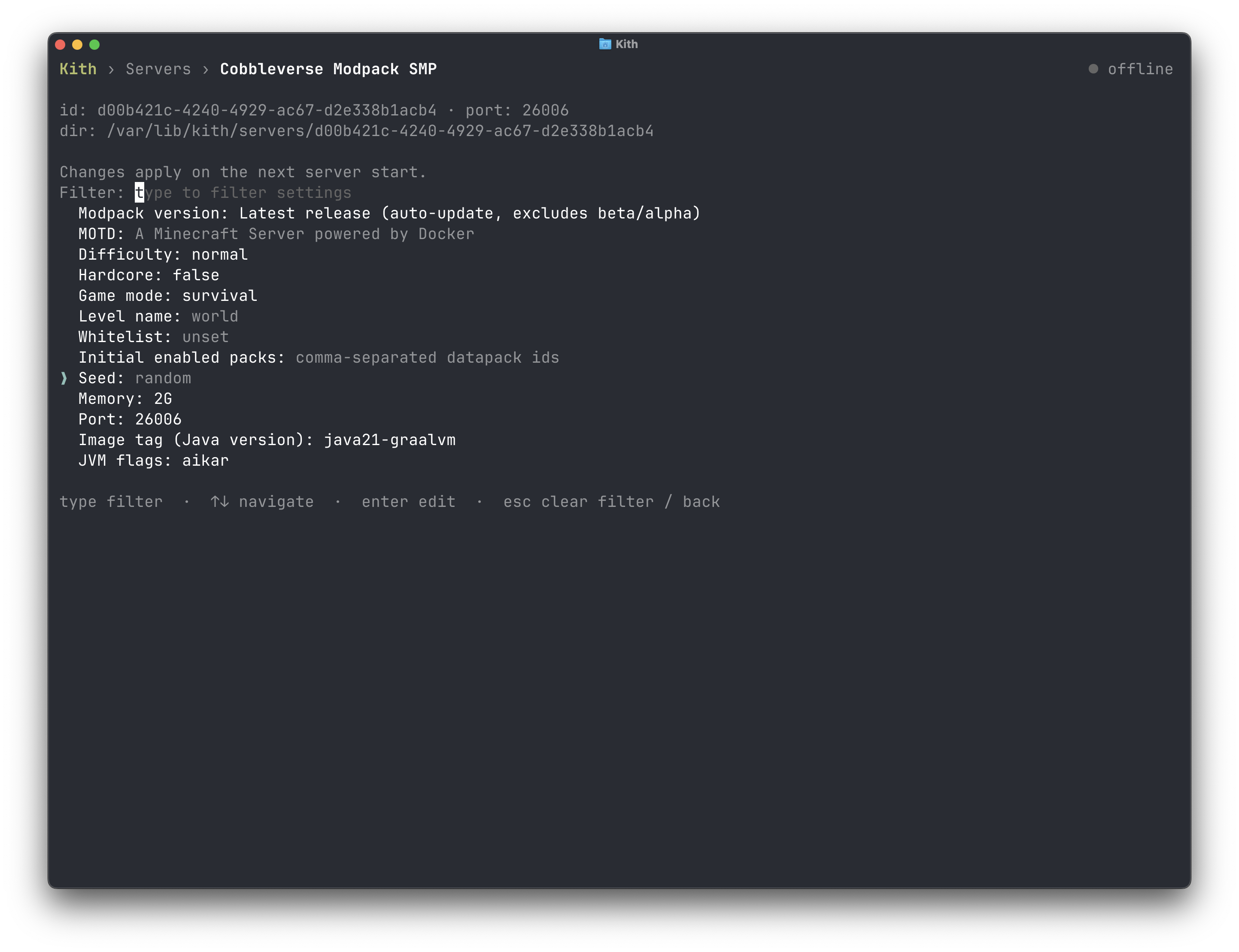
Edit memory, port, version, and modpack settings per server. Kith rewrites the server's docker-compose.yml on changes, preserving anything it doesn't manage.
Backups
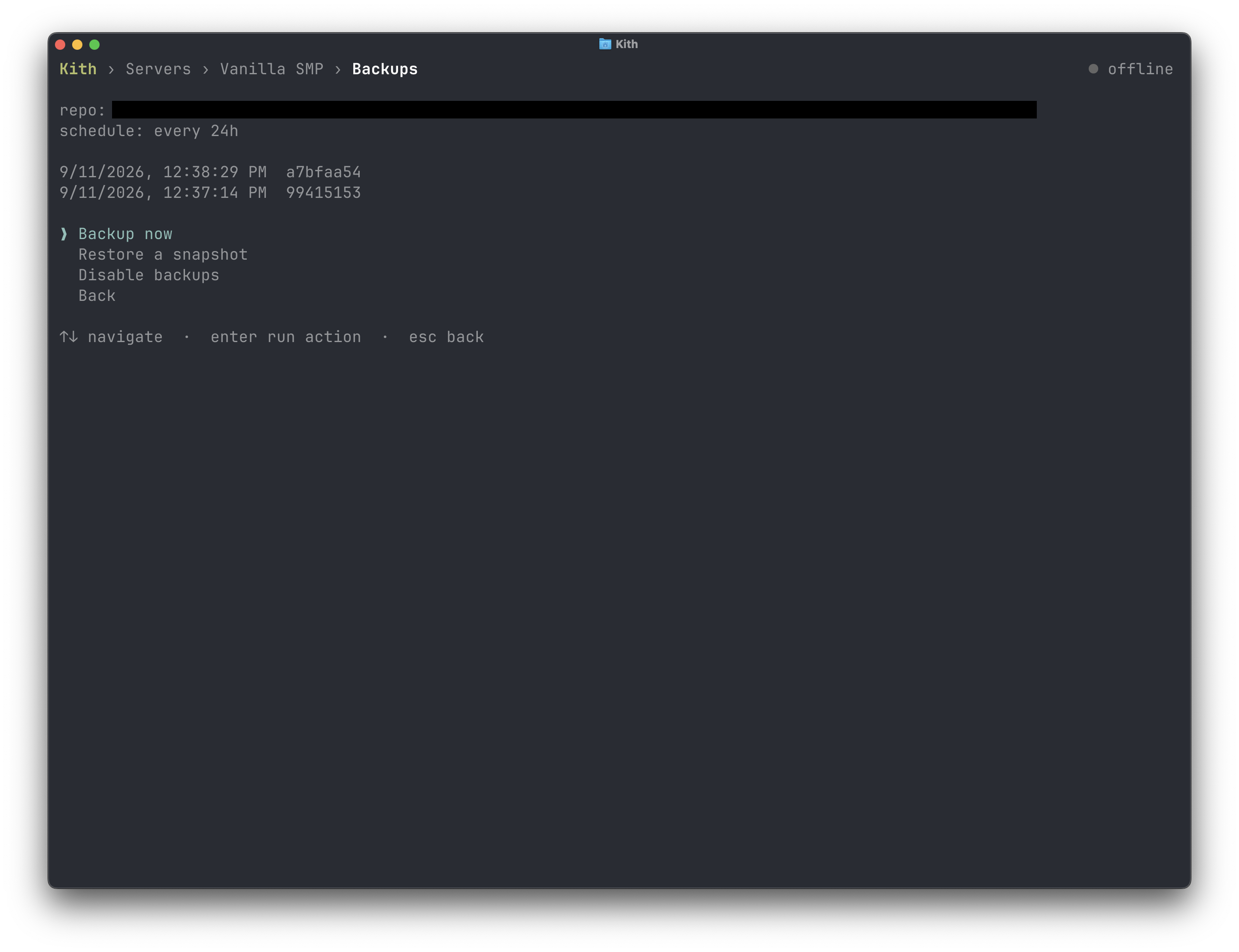
Take snapshots on demand, browse snapshot history, restore to any snapshot. See Backups.
How it works
Each server is a directory under KITH_SERVERS_DIR (~/.local/share/kith/servers by default) containing:
docker-compose.yml, the server definition. A standard compose file you can read and edit.patches.json, your config patches, re-applied on every start. See Patching mod configs.data/, the server's live data: world,server.properties, mods, plugins. Mounted into the container at/data.
Everything in there is yours. Edit configs directly, drop files into data/, add services to the compose file. Kith only rewrites the parts it manages and preserves the rest. Servers are ordinary Docker Compose projects, so docker compose commands work in the directory too.
Removing a server
Stop it, then delete or move its directory out of KITH_SERVERS_DIR. There's no delete command in the app yet. The directory is the server, so removing it removes the server. Backup repositories live separately under KITH_BASE_BACKUP_DEST and aren't touched.